

Study reveals how tiny diatoms survive phosphorus starvation
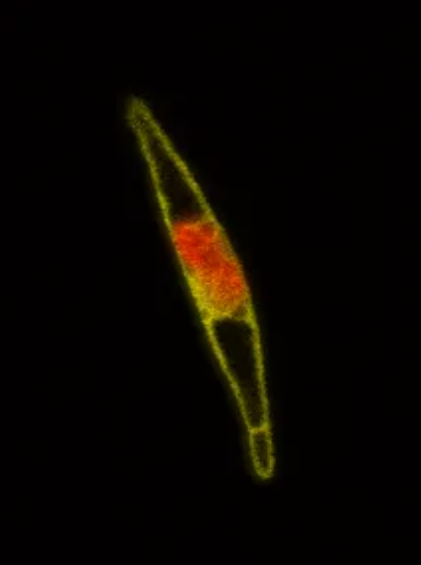
Our colleagues at the Marine Biological Association (MBA), together with scientists at the University of Exeter have uncovered a key mechanism that helps diatoms – the microscopic algae that underpin marine food webs – survive when one of life’s essential nutrients runs low.
The study, ‘A plasma membrane Ca2+-dependent protein kinase PtCDPK2 promotes phosphorus starvation resilience in Phaeodactylum tricornutum’, led by PhD researcher Dr Yasmin Meeda and senior author Dr Katherine Helliwell, identifies a calcium‑dependent protein kinase, PtCDPK2, that helps the model diatom Phaeodactylum tricornutum cope with phosphorus (P) starvation. Their findings shed new light on how phytoplankton sense and respond to changing nutrient conditions in the ocean.
Diatoms are responsible for around 40% of marine primary production, fuelling fisheries, supporting marine biodiversity, and helping to regulate Earth’s climate through carbon cycling. Understanding how they adapt to fluctuating nutrients is essential for predicting how marine ecosystems will respond to environmental change.
This new research highlights the vital link between cutting-edge ecological science and long-term ocean monitoring. While studies such as this reveal the molecular mechanisms that allow diatoms to survive nutrient stress and continue supporting marine food webs, monitoring programmes like the Continuous Plankton Recorder (CPR) Survey provide the long-term observational data needed to understand how these processes play out across entire ecosystems and over decades of environmental change. Together, these approaches complement one another: laboratory and experimental research explains the “how” behind plankton resilience and adaptation, while large-scale monitoring shows the “when”, “where”, and “why it matters” in the real ocean. Combining ecological insight with sustained monitoring is essential for improving predictions of how marine ecosystems will respond to climate change, nutrient shifts, and other human pressures.
What this means for marine life and for us
They may be microscopic, but diatoms play a major role in supporting life on Earth. Insights into how they survive nutrient stress have wider implications:
- Marine productivity and food security
Diatoms form the base of marine food webs. If they struggle during nutrient shifts, it can ripple up to zooplankton, fish, seabirds, and marine mammals. - Ocean biogeochemistry and climate regulation
Diatoms help draw carbon dioxide out of the atmosphere. Their ability to thrive in low‑nutrient waters affects how much carbon the ocean can naturally store. - Predicting ecosystem responses to change
- Human activities are altering nutrient inputs into the sea, through pollution, climate‑driven changes in mixing, and shifts in runoff patterns. Understanding how diatoms detect and adapt to these changes improves our ability to forecast ecological impacts.
- Discovery of new molecular pathways with potential implications for biotechnology
- Diatoms use nutrient‑sensing mechanisms distinct from those in plants and green algae, offering opportunities for new biotechnology and research into how marine microbes regulate nutrient cycles. Microalgae also provide promising solutions for cleaning phosphate pollution from sewage and industrial waste, helping reduce agricultural run‑off impacts while enabling sustainable phosphorus recycling. As global phosphorus reserves decline, understanding the conditions and mechanisms that support algal phosphorus uptake is crucial for developing these technologies.
“Diatoms are tiny, but they play a huge role in the ocean. Understanding how they cope when nutrients become scarce helps us predict how marine ecosystems might respond as climate change and human activities alter the chemistry of our oceans,” Yasmin adds.
By illuminating how diatoms sense and respond to their environment, the study strengthens our broader understanding of the marine carbon cycle and the resilience of ocean ecosystems.
Read more on the research here