

A 1920's Unlikely Hero for Cutting-Edge Marine Research
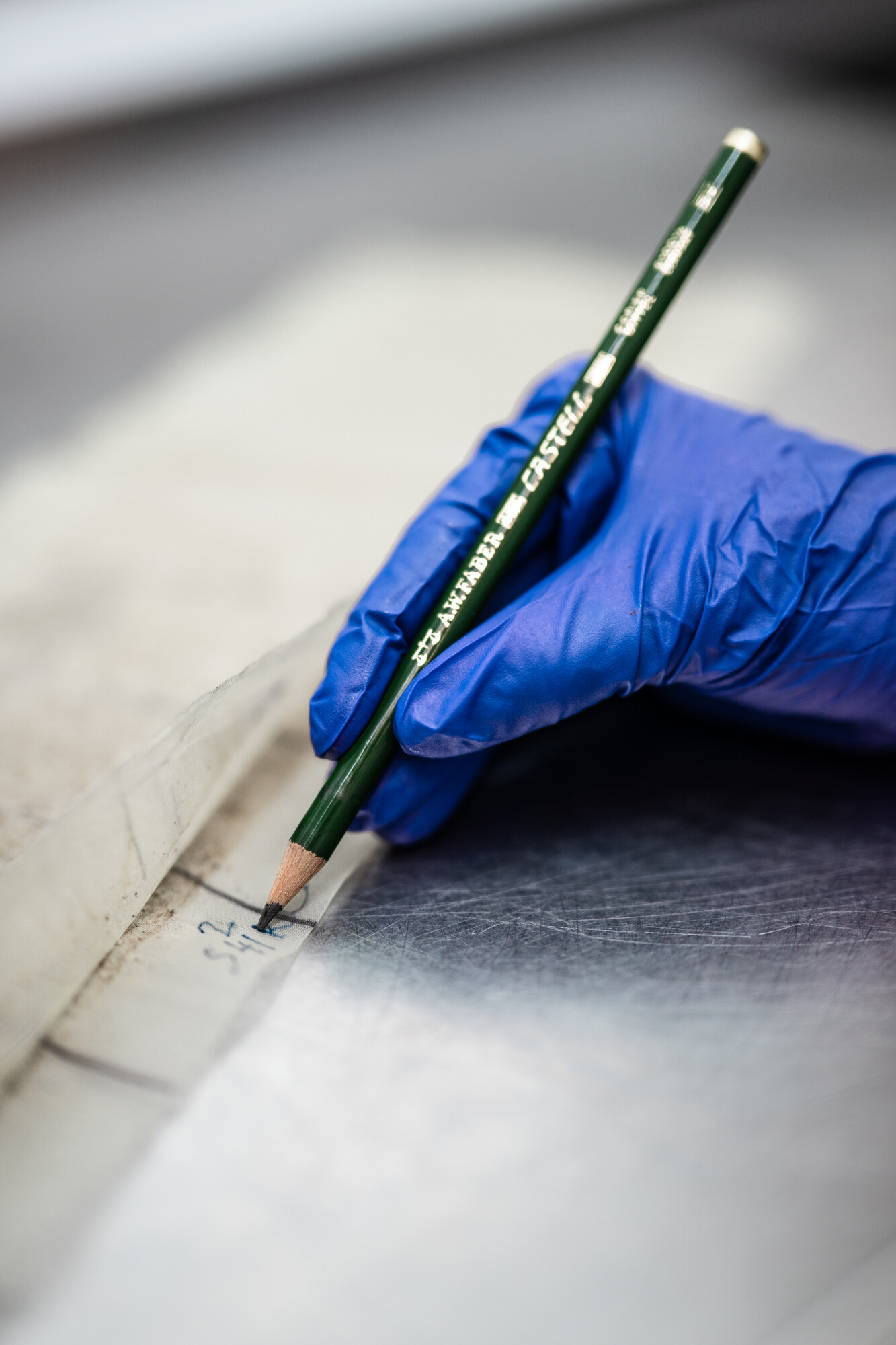
The CPR Survey has rediscovered a surprising but essential tool for one of today’s most important environmental archives: pencils manufactured over a century ago.
The Continuous Plankton Recorder (CPR) Survey, which began in the North Sea in 1931, has since expanded worldwide, becoming the longest-running and most geographically extensive marine ecological survey in history. Over its nearly century-long operation, the survey has provided invaluable data used to track changes in the environment, climate, and biodiversity trends.
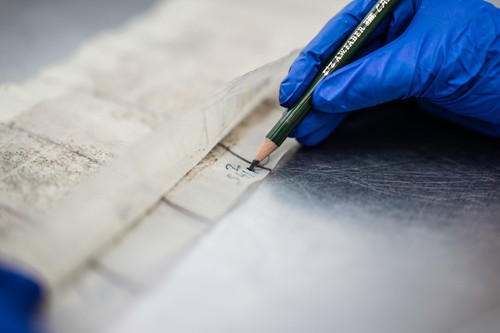
The CPR instrument, towed behind ships of opportunity, collects plankton on a moving roll of custom-made silk. Once all the plankton have been identified and recorded by the team of analysts these silks are then archived, serving as long-term biological snapshot in time, allowing scientists to look back in history. But preserving those records with clarity and longevity requires a tool that’s as reliable as it is precise – a pencil to mark each sample with a unique identifier.
The Pencil Trials
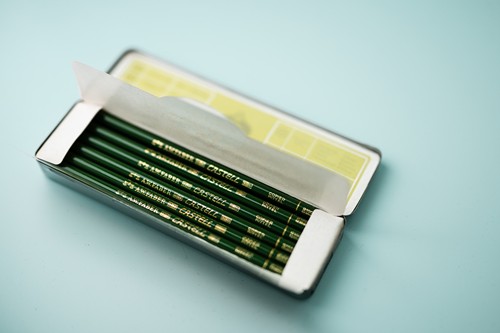
What should of began as a routine order for consumables ending up turning into a pencil investigation. The pencils; A.W. Faber-Castell 9100 ½ pencils, had been used to mark the silks with the sample location ID were discovered to no longer be manufactured – the trials to source and use new pencils of a consistent quality began.
The team looked at the manufacturers current pencil selection, at other manufacturers, different types of marking devices (such as chinagraphs and fabrics pens). Each underwent rigorous testing on sample silks to assess quality and longevity. Some crumbled too easily. Some scratched rather than wrote. Some smudged. In addition to these physical issues, as CPR samples can be used to conduct molecular work, there was a need to ensure any newly introduced materials would not impact these results.
After two years of testing the team concluded none of the tests on the new pencils were fully successful, so a hunt began - were there any of the original pencils still in circulation? The pencils, manufactured in Germany during the 1920s, are now considered vintage or antiques. This lead the search to vintage stores, pencil clubs, forums, searching the globe for any boxes that may be collecting dust in a corner somewhere. And the searches were fruitful, the team found collectors, sellers, dealers in the UK, Germany and the USA, allowing the team to build up their stocks.
The team tested these 1920 vintage pencils to ensure they worked as intended - the century-old tools didn’t just work—they outperformed their modern counterparts. “Modern pencils are designed for notebooks or digital scanning. But on our silks - a medium with its own sensitivities - only the original pencils made clean, lasting impressions that stood up to time, humidity, and handling.” said Plankton Analyst, Gemma Brice.
A Legacy of Precision, Preserved by Tradition
The marks left on the silks must endure for a long time. Researchers need to return to them decades later and read every stroke as clearly as the day it was made. The ones from the 1920s consistently outperformed them all.
Now, nearly a hundred years after the project started, it proudly uses these same tools it did back then. Not out of nostalgia, but because but because it works best and consistency is essential in running the a successful time series. In a world fixated on innovation, sometimes progress means embracing what already excels.
The CPR Survey prides itself on its science evolving with the times, answering scientists questions as new ideas and techniques arise – however, to do this, you need consistent results. The humble pencil shows that sometimes you cannot improve on the original’
Director of the CPR Survey, David Johns said “We’re proud to bridge a nearly hundred-year-old tradition with the future of ocean science.”
As scientists across the world continue to analyse these invaluable plankton records, they do so thanks in part to a century-old pencil - leaving marks that may outlive us all.
Why Every Cog Counts
This story shows that in science, every single component matters. From the ocean towing vessels to the humble pencil tip, all must be reliable. The tiniest detail - like a pencil’s graphite - can determine whether decades of data remain legible and scientifically valuable.
As researchers around the globe continue analysing plankton records, they do so thanks to this century old pencil—an unassuming yet crucial cog in the vast machine of marine science.
Founded in 1931, The CPR Survey has long contributed to marine research, and additionally stores the plankton collected from around the globe for retrospective analysis. With climate change bringing unprecedented attention to marine biodiversity, the ability to look back through archival silks is more valuable than ever.